
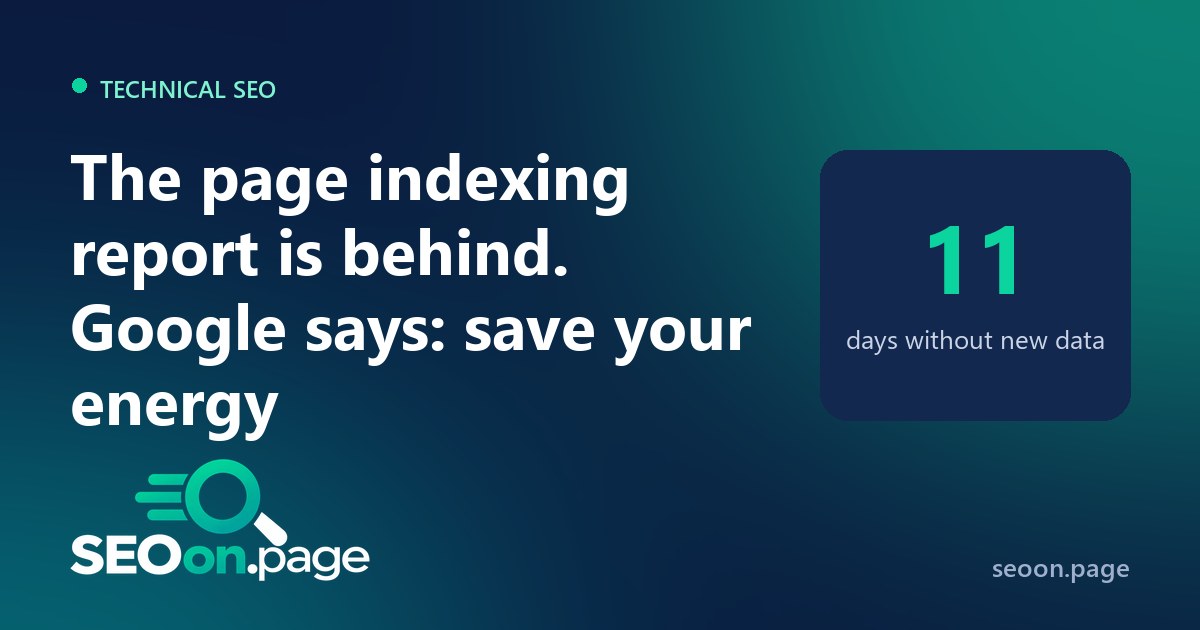
In October 2026, many site owners noticed that the page indexing report in Google Search Console had stopped moving. One user on Reddit said the last update was on October 16, with a flat line since then. By October 27, that was about 11 days without new data. When the question reached Google, John Mueller’s answer was short: it may feel important to focus on it, but save your energy.
What Google said
- Indexing changes slowly. Mueller explained that indexing does not change quickly, and when it does, you see it in the performance reports first.
- Dates are shown for a reason. He said it does not make sense for Google to comment on the freshness of every report all the time; each report shows the date of its data.
- Priorities. Google prioritizes faster updates where it thinks they are actually useful, which suggests the indexing report is not one of them.
Google did not confirm a bug or give a date for the report to catch up. Other Search Console reports also had delays in October, so check the date in each one before reading the numbers.
Why the delay rarely matters
The page indexing report is a long-term health view: how many pages are indexed and why others are not. Those counts usually move over weeks, not days. If something serious happens, like a big drop in indexed pages after an accidental noindex, clicks and impressions in the performance report react sooner.
What to watch instead
- Performance report: clicks and impressions by page are the earliest sign that something changed in Search.
- URL Inspection: for an important URL, it shows the live status, the last crawl and the canonical Google chose, without waiting for the report.
- Sitemaps report: discovered URLs and errors for the sitemaps you submit. Make sure they are valid with our Sitemap Validator and read our XML sitemap guide.
- Your own checks: status codes, robots meta tags and canonicals on key templates. Our HTTP Header Checker shows status codes and X-Robots-Tag headers in seconds.
When indexing data does deserve attention
- After a migration, a redesign or a change of CMS.
- After changes to robots.txt, noindex rules or canonical tags. See our guide to canonical tags.
- When important pages appear as “Crawled – currently not indexed” for a long time.
- When the number of indexed pages grows suddenly, which can be a sign of spam or parameter URLs. Read Google’s new advice on shared pages.
Frequently asked questions
Frequently asked questions
Why is my Search Console page indexing report not updating?
In October 2026 the report stopped updating for many sites for more than a week. Google did not confirm a cause, and each report shows the date of its latest data.
Does a delayed report affect my rankings?
No. It only affects the data you see in Search Console, not how Google crawls, indexes or ranks your pages.
What should I check instead of the page indexing report?
The performance report for clicks and impressions, URL Inspection for key pages and the sitemaps report.
How often should I check indexing data?
For most sites, weekly or after major technical changes is enough. Indexing rarely changes quickly.